
Category: The Way of Saint Thorlak

  • The Leaky Cup: A Parable

    The Leaky Cup: A Parable

    There once was a family who was part of a large Catholic parish.  This parish was a flourishing center of faith and fellowship, highly attended every weekend and host to many ministries and activities during the week.  Of all the gatherings sponsored by the parish, the most popular by far was the weekly Community Dinner offered every Friday night.  People young and old, from all walks of life, eagerly filled the parish hall to partake of the feast, freshly prepared and served by parish staff and members of the social ministry committee.

    This family was among the many who came each week to eat and enjoy the camaraderie.  Curiously, it seemed that as often as they dined there, at least one of their cups had a leak, and needed to be refilled more frequently.  Week after week, the family ate with friends and neighbors just the same, but the food servers noticed how often one of them would ask again and again for more water.  Soon, the staff began to muse among themselves.  Was this family more careless than their neighbors?  Was the water being spilled?  Were they greedier than the other families?  Was there something wrong with one of them, that they drank so much water?  After a few more weeks, the staff started asking these questions directly of the family, who replied honestly that one of their cups seemed to have a leak, so their water needed filling more often.  The servers grumbled impatiently once back in the kitchen, wondering why this family could not use cups like everyone else did.  They speculated that the family might be purposefully doing this for attention.  Maybe they needed to be shown the proper way to use cups, or should learn not to ask for more than their allotted portion.  Eventually, the staff began to refuse this family water refills.  One or two even thought it might be in the best interest of the community to ask this family to not attend the dinners – at least until they can learn better manners, or, at the very least, show some gratitude.

    Finally, one Friday, the pastor himself was helping prepare and serve the food in the kitchen, and overheard the talk begin about the family with the leaky cup.  As one of the servers scoffed that it was not possible for this to be a random problem week after week, the pastor spoke up in agreement.  “You are right,” he said.  “This can’t be happening by accident.”

    The servers were pleased that the pastor noticed the problem too, and asked what he planned to do about it.

    “Nothing,” he said.  “I am the one who gave them that cup.”

    Taken by surprise, the servers were at a loss for words.  The pastor continued: “It is very easy to become complacent with what we do in the name of service… and so, to make sure we keep the elements of solicitude, compassion and hospitality at the front of everything we do, I asked that family if they would be willing to take a very special cup I’d set aside for them to use, week after week.  I call that particular cup, ‘the cup of kindness,’ as it brings us to the very brink of human need each time the holder asks in humility for it to be refilled.”

    The kitchen staff looked down and said nothing.  The pastor added, “Since it’s just water, I didn’t think anyone would begrudge the family a few extra refills.  They have been very gracious to keep the one with the leak for me.  I’d asked around before I found a family willing to regularly use a cup with an imperfection.  Most people said they are here to enjoy a meal, not to have any extra hassle.  I finally found a family with the foresight to see that this cup was good to use at any table, and would in fact be an avenue for blessing and grace for the entire community.”

    The pastor excused himself, noticing the food was nearly ready to be plated.  The servers were unusually quiet for the rest of that night, but as they brought plates and poured drinks, they found themselves focusing less on the cups and dishware and more on the people using them.  And thus it was that the leaky cup brought more to the banquet, exactly as it was, than anyone ever imagined it could.


    How do people respond to your leaky cup?
     

  • Raise your hand if you’re not here

    Raise your hand if you’re not here

    by Aimée O’Connell

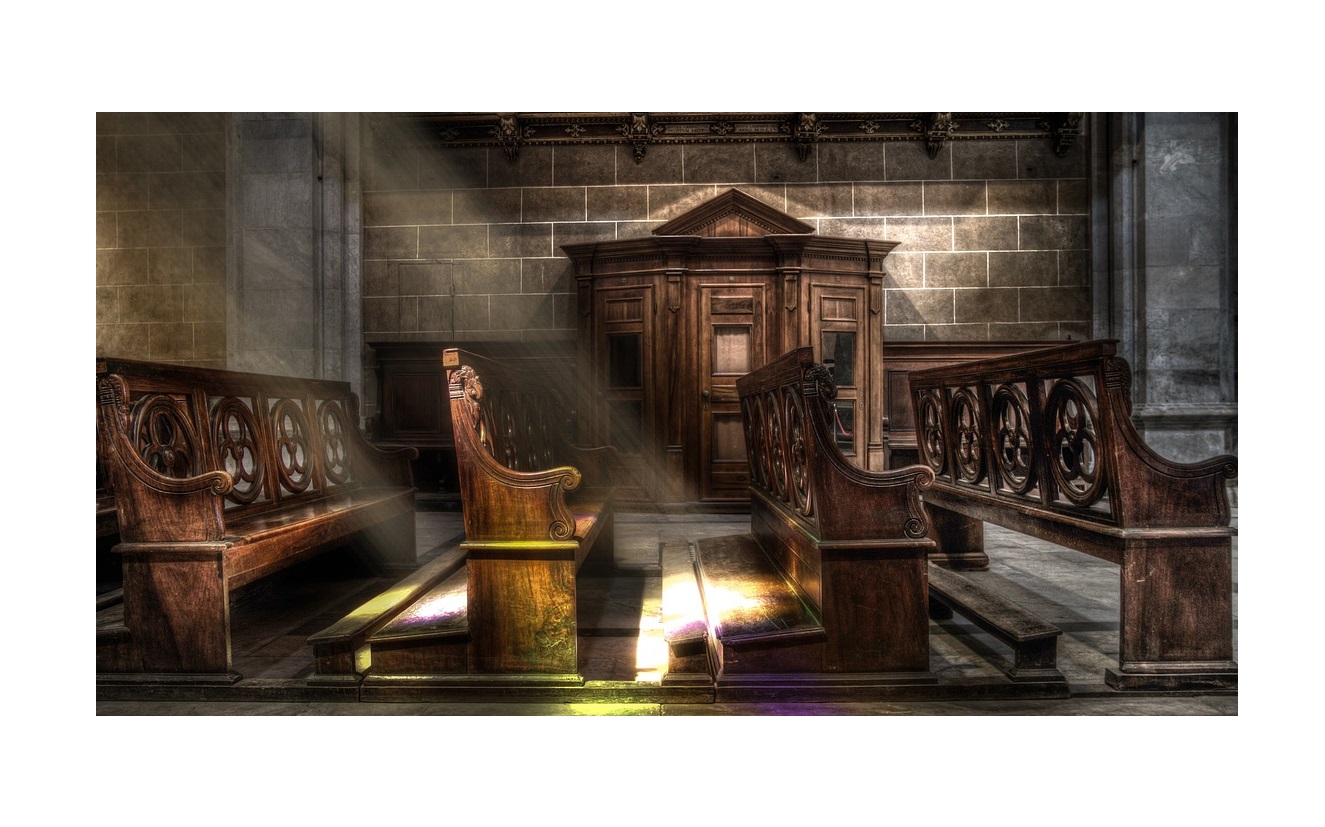
    Next time you go to church, look around and get an idea of how many neurodivergent (i.e., autistic and/or ADHD) people are in attendance.  It’s a number you’ll want to know if ever you are asked how your parish might offer sensory supports and accommodations for neurodivergent parishioners.

    Right away, the difficulty of such a task becomes evident.  Counting ourself, the number is… one? More, maybe, depending on how many of our family members are with us?  How can we truly tell, without falling back on stereotypes?  Somehow, tabulating any “problem behaviors” we see feels unfair… and yet, this is usually how people begin considering what neurodivergent needs exist in any community.  Catechists can usually pick out the students whose sensory and processing needs don’t work well with the way classes and instruction are expected to run, for instance.  Parishioners learn to recognize which little ones have the most difficulty sitting still and staying quiet during the liturgy.  But that only takes into account the younger members of the parish.  Where would we look for the neurodivergent teens and adults?  Youth ministry? CYO? Bible study? Social ministry and volunteer committees?

    Mmm… not exactly.

    In many parishes, neurodivergent teens and adults simply do not participate.  Sometimes this is voluntary avoidance on their part… and, sometimes, this is the result of participation being discouraged by the parish.

    Yes, you read that correctly.

    Sometimes subtly, sometimes directly… sometimes by deliberate omission… sometimes by an accumulation of unkind gestures which finally reach a breaking point.  Sometimes by fellow parishioners, and sometimes by parish staff.

    It is not an exaggeration to say that a large portion of people who reach out to Autism Consecrated do so in distress and sorrow after being told, in one form or another, that their sensory needs are a nuisance, a distraction, a burden… or a sign of bad character.  The prevailing belief seems to be that autism and ADHD are childhood conditions, and those parishes offering support and accommodations only do so for children.  Teens and adults are expected to either have no further needs or to meet their own needs for themselves.

    How can this be? Is it that parish resources are limited, and what few helps exist must go to the children first?

    More often, the reason given is that there aren’t any [or, aren’t enough] teens or adults with special needs to justify further supports. Making accommodations for a small number of adults is considered catering, and nobody wants to give preferential treatment to one or two fussy parishioners. Better they should learn how to cope, like the rest of us.

    But, you say, maybe the parish does not yet understand what the needs are, and would do better if they had a better explanation!

    You’d think.  But it has also been our experience in hearing story after story that these explanations are anything but helpful.  Many neurodivergent people have taken great pains to describe their needs and find ways to meet parishes halfway in finding accommodations for them to be able to attend liturgies and social events.  The response has been tepid at best and callous at worst.  Teens have been cut from youth group rosters rather than efforts made to adapt existing programs.  Adults have been asked to leave Bible study for asking too many questions or taking too long to respond in small-group sharing sessions.  Priests have given homilies sarcastically asking if people leaving Mass early enjoy their early bird dinners and sporting events, when in fact there are some who have left on the verge of sensory meltdown after enduring overload from the lights, music and pressures of having to suppress their neurodivergent needs.  Ear defenders have been yanked from people’s heads for being disrespectful.  When people have asked for basic accommodations ahead of planning meetings and volunteer events, their messages are not returned, and the meetings go ahead without them – finding them afterward branded as a no-show.

    Other times, it’s a Catch-22.  When neurodivergent adults have availed themselves of the supports offered, such as a cry room, they are summarily told these spaces are for children, not to be taken advantage of by bored or restless adults looking for more legroom.  Or, parishes have offered a designated sensory support space for neurodivergent parishioners, only to “borrow” the space during Masses for other purposes, acting surprised when someone wants to use the room that was supposed to be for their needs.  Some parishes offer adaptive First Communion prep and pictorial guides designated for children.  A good start, yes, but when those autistic children have grown into teens, they find that there are no similar supports for participation and sacramental prep as teens and young adults.  For that matter, many parishes have adaptive catechetical resources for young children, but nothing adaptive for RCIA.  (In fact, if you search online for “adaptive RCIA,” the results all point to how to make RCIA accessible to children, not adults).

    These are not hypothetical situations.  These have all actually happened… and are actually happening.  Many neurodivergent teens and adults have tried their best to participate but find themselves left out anyway.  Many now simply stay home because the combined demand of participation and fielding criticism is too much.

    Recent estimates suggest one in fifty adults may be neurodivergent.  That number is likely too low, as it is extremely difficult for adults to be formally assessed for autism and ADHD, even when they show a majority of the defining characteristics of either or both. Some have proposed that a better estimate  assumes one autistic/ADHD adult for every autistic/ADHD child we know.  (See more in the articles linked at the end).  If that’s the case, it’s safe to say that every parish has at least one person with sensory needs, with the actual number being much higher.

    It’s hard to count how many of us there are when parishes keep turning us away.  Where is the spirit of John 18:9, “I did not lose a single one of those whom you gave me”?

    We must pray all the more that our parishes awaken to the words of Luke 19:10, “The Son of Man came to seek and save the lost.”  May we especially apply this to the lost generation of neurodivergent adults.

    * * * * * * * * * * * * * * * * * * * * * *

    A sampling of articles for further insight:


  • An update on the Virtual Café

    An update on the Virtual Café

    It is nearly two months after Autism Consecrated introduced our Virtual Café, and the concept is doing exactly what we had hoped it would.

    In offering a Virtual Café, we sought to provide something simultaneously real and imaginary, simultaneously tangible and intangible.  Whereas an actual café might be a building offering an oasis of refreshment, our concept goes one step further by requiring participation of the imagination.  What distinguishes the experience is that it is a shared activity – the formation of a community in the unseen, where empathy and acceptance exist unbounded by tangible limitations.  When we offer a space to rest and recharge without pressure, that space comes from the constructs of our attitudes, our beliefs, our desires, our intentions, and our lived experience.  It is what ultimately drives any sense of refreshment our visitors will experience and take with them.  None of those things are “make believe.”  The hospitality we extend is very real. We know what it is like to live in a world that dismisses autistic needs as irrelevant to the community, as individual hardships to be endured without inconveniencing the many… and we also know that is not the way human beings are designed to live.  Our goal is to make St. Thorlak’s Virtual Café  a place where empathy and compassion are freely and happily given, as often as our cups need refilling.

    We are pleased to have a model at hand showing that neurodivergent hospitality can, in fact, be offered in a readily applicable and sustainable way.  St. Thorlak’s Virtual Café has no other operating cost than the fraction of the web domain devoted to its posting.  The resources needed can be readily found in the imagination… in the unseen… in the creativity that flows from the mere attitude of welcoming one another.  Would that brick and mortar institutions might notice that inclusion and belonging are not prohibited by either the limitations of disability or the lack of physical resources and accommodations.